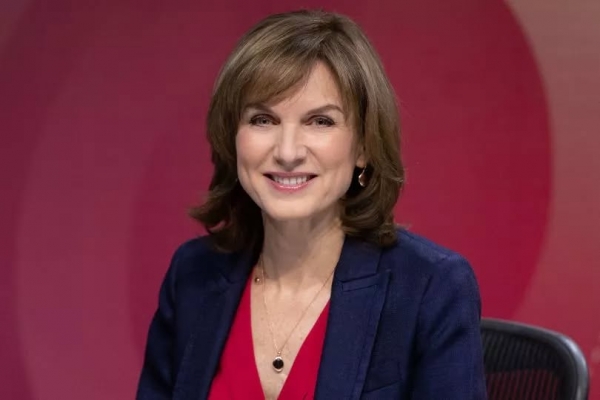
BBC Question Time heading to Bristol on 12 February 2026
Posted on: 05 Jan 2026BBC Question Time will be in Bristol on Thursday 12 February 2026 and they are looking to pick the audience members. Click on the link below to register your interest and one of the team will be in touch to let you know if you have been successful or not.
REGISTER TO ATTEND HERE
Question Time audience members will be requested to come up with TWO questions to be considered for the programme. Please note that everyone applying to be part of the studio audience is required to complete this form. The information is completely confidential and only used for the purpose of balance.
It's important that as many applicants as possible get the chance to be part of a Question Time audience. If you have been in a QT audience within the past five years producers are delighted that you want to do it all over again, but please give others a chance and don't apply this time round. If you have applied before but not been successful, they welcome your application.
You can also apply by telephone. To do so, call 0330 123 9988.
BBC Question Time: Four Decades at the Heart of Britain’s Political Conversation
For more than 40 years, BBC Question Time has occupied a singular place in British public life, a weekly arena where politicians, public figures and ordinary citizens meet under studio lights and sharpened scrutiny.
First broadcast on 25 September 1979, Question Time was created as a television counterpart to BBC Radio 4’s long-running programme Any Questions? From the outset, its mission was clear: to bring democratic debate out of Westminster and into communities across the United Kingdom. The original format, an audience questioning a panel of decision-makers on the issues of the week, proved both durable and combustible.
The inaugural programme was chaired by veteran broadcaster Sir Robin Day and featured a panel that included Labour politician Michael Foot and novelist Edna O’Brien. Recorded at the Greenwood Theatre at King’s College London, the show quickly established its defining characteristics: plain staging, unscripted audience questions and a willingness to let disagreement play out in full view of the public.
Sir Robin Day remained at the helm for the programme’s first decade, imprinting it with his sharp, prosecutorial style. His tenure set expectations for firm moderation and an insistence that politicians answer directly, even when the questions were uncomfortable. He was succeeded in 1989 by Peter Sissons, who presented the programme for four years during a period of political transition in Britain.
In 1994, David Dimbleby took over the chair, beginning what would become the longest and most recognisable era in the programme’s history. For nearly a quarter of a century, Dimbleby guided debates through seismic moments including the rise of New Labour, the financial crisis, the Scottish independence referendum and the early years of Brexit. Under his stewardship, Question Time became a Thursday-night fixture, watched by millions and frequently setting the tone for the following day’s political coverage.
The programme has not been without controversy. Perhaps its most talked-about episode aired in 2009, when Nick Griffin, then leader of the British National Party, appeared on the panel. The decision prompted protests outside the studio and fierce debate about platforming extremist voices. Inside, the atmosphere was confrontational, and the broadcast drew one of the largest audiences in the show’s history.
In January 2019, Fiona Bruce became the first woman to host Question Time on a permanent basis. Her appointment marked a significant moment in the programme’s evolution, reflecting broader changes within the BBC and British broadcasting. Bruce inherited a show operating in a more fragmented media landscape, where clips circulate instantly online and audience reactions are amplified far beyond the studio.
Despite changes in presenters, politics and technology, the core format of Question Time has remained largely intact. Each week, a panel typically made up of senior politicians, journalists and public figures faces questions submitted by a local audience, with discussion ranging from economic policy to social issues and foreign affairs. The programme continues to travel the country, reinforcing its emphasis on regional voices and public participation.
Critics have at times accused the programme of bias, of selecting unrepresentative audiences or of favouring confrontation over clarity. Supporters counter that its very messiness is a reflection of democratic life, and that few other platforms place politicians so directly in front of the public.
More than four decades after its debut, BBC Question Time endures as a barometer of public mood and a stage on which Britain’s arguments are rehearsed in real time. In an era of soundbites and social media, its insistence on live, unscripted debate remains both its greatest challenge and its defining strength.
Article by:
Bristol born and bred despite the name, Brendan has been working in the digital media sector for the last 15 years and advertising for the last 25 years. A wealth of knowledge about the city and more importantly at how to help businesses get as much online exposure as possible. Call Brendan on 07876 735153 or email Brendan@365bristol.com.