The Holburne Museum in Bath - An Art Museum for Everyone
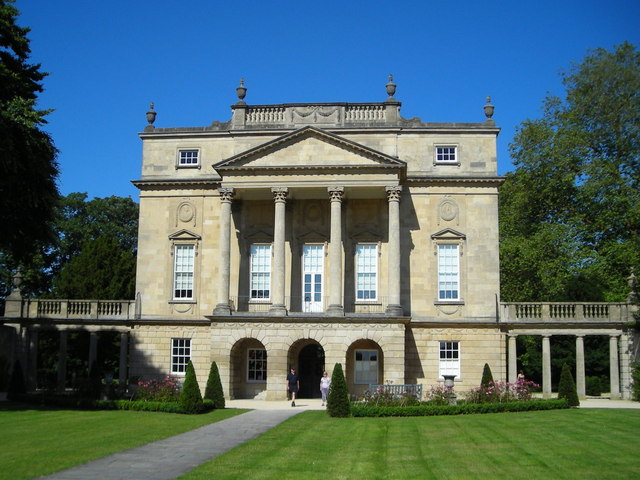
Posted on: 21 Mar 2014The Holburne in Bath, a late 18th-century neoclassical gem located at the end of Great Pulteney Street and one of the best-loved regional museums, was originally a hotel for wealthy tourists when the city was one of the most fashionable spa resorts in Europe. It was converted to house the Holburne museum a century ago and it is based on the bequest of Sir William Holburne, a midshipman and a formidable collector of bronzes, porcelain, armour, paintings, books, ceramics, furniture and objects of everyday life such as spoons, which Holburne collected obsessively.
In 2011, the museum reopened after a three-year closure and the completion of a spectacular ceramic and glass extension into the beautiful gardens behind the original building, that creates an unexpected harmony between town and country, nature and artifice, new and old.
The museum is on three levels plus a basement with a library and a study centre. On the first level, you find the Davidson Galley with a display of silver, ceramics, Renaissance bronze and paintings, and the Collection Gallery that contains treasures collected by Sir Holburne and a collection of seventeenth-century Dutch art, small wonders, miniatures and embroideries. Besides the precious gems and the intimate portrait miniatures, there is a section dedicated to Fakes and Mistakes, revealing us that not everything Sir William owned was what he thought it was. He wrongly believed he owned a Leonardo, a Velazquez and more. A few of his paintings were true fakes but many simply had the wrong artist’s name attached to them. The reason of this is simply said. In the nineteenth century there were few books, museums or experts to guide and advise collectors.
The mezzanine houses the Fletcher Gallery where it is possible to explore a fascinating collection of objects telling us the story of life and culture in the eighteenth century and in the city of Bath, when the city was second only to London as an artistic and shopping centre and attracted artists and performers, artisans and traders from all over Britain and far beyond.
The second and final floor is home to the Brownsword Gallery with its collection of eighteenth century British paintings, including works by Gainsborough, Zoffany, Ramsay and Stubbs; the Wirth Gallery, that from the 22nd of February to the 1st of June, will have on its walls an extraordinary collection of colour 3D photographs of Picasso taken by Robert Mouzillat; and the Roper Gallery that, from Saturday 25 January to Monday 5 May 2014, houses the special exhibition “Joseph Wright of Derby-Bath and Beyond", curated by Amina Wright, that nobody visiting Bath should miss.
Joseph Wright “of Derby” (1734-97) arrived in Bath in the winter of 1775, when the spa town was at the peak of its Georgian success. The son of a Derby lawyer, Wright had been a busy and esteemed portrait painter for twenty years and he hoped Bath would be as ready to recognise that genius. He spent in Bath only 18 months and we don’t know why he left, probably he wanted to make his return home to his family or maybe he went away because he could not find that success he expected to reach. He settled in Bath when Gainsborough moved to London seeing a gap in the market for an enterprising portrait painter. He came to Bath following two years of travel and study abroad. In particular, his experience in Italy gave him the confidence and the knowledge to become a successful landscape painter. The exhibition shows his spectacular paintings of “Vesuvius in Eruption” and Roman fireworks (“The Annual Girandola at the Castel Sant’Angelo”), two paintings that captured Bath’s attention when Wright arrived. In Bath, instead, he began to explore subjects from sentimental contemporary literature, which in turn have a strong impact on his portrait composition, and the exhibition includes some of his most beautiful depictions of figures alone in the landscape. However, since he was only capable of painting well when his subject engaged his intellect or his feelings, it isn’t surprising that Wright just didn’t connect with visitors who came to Bath for a few weeks to take the waters or to find a partner.
To improve his business, Wright held exhibitions in his studio where visitors could see not only his work in portraiture but earlier paintings he had brought with him. Such pictures attracted the curious but when they didn’t sell Wright was forced to face the fact that from a financial point of view his time in Bath had been a flop and then he decided to leave.
In general after the failure he had in the city his subjects became more original as we can see, for example, in an American Indian widow grieving for her fallen warrior. Probably no conventional member of the middle class he met in Bath would dream of buying them. And if so, I like him even more than I did before seeing this great show.
At the end of your visit, don’t go away without tasting a tea/coffee with a sandwich or a piece of cake from the garden café. Its view on the garden deserves a special mention.
The Holburne Museum is open daily from 10am until 5pm (11am to 5pm Sundays and Bank Holidays) and admission is free - aside from occasional temporary exhibitions. For more information please visit www.holburne.org.
by Evita Sabatiello for 365Bristol
Article by:

Born and raised in the suburbs of Swansea, Jimmy moved to Bristol back in 2004 to attend university. Passionate about live music, sport, science and nature, he can usually be found walking his cocker spaniel Baxter at any number of green spots around the city. Call James on 078 9999 3534 or email Editor@365Bristol.com.